World of Coffee Was Inspiring—But It Also Got Me Thinking
I recently returned from a World of Coffee event in San Diego, and like most gatherings in our industry, it was full of energy. New coffees and brewing methods being shared for the first time. Busy booths. Conversations moving quickly from one exciting thing to the next. Coffee, at its best, on full display. Vibrant, expressive, and easy to enjoy.
It reminded me of why I love this work.
But it also left me sitting with a familiar tension.
Because as much as coffee is celebrated in those spaces, as fun, innovative, and full of possibility, that’s only one part of the story. And when you’ve spent time at origin, it’s hard not to feel the distance between how coffee is presented and how it actually comes to be.
Over the past decade, I’ve had the privilege of learning coffee from many angles. From roasting and cupping to time spent alongside farmers, workers, and producing communities. Those experiences stay with you. They reshape how you understand quality, and they don’t fade when you step into more polished environments like a trade show.

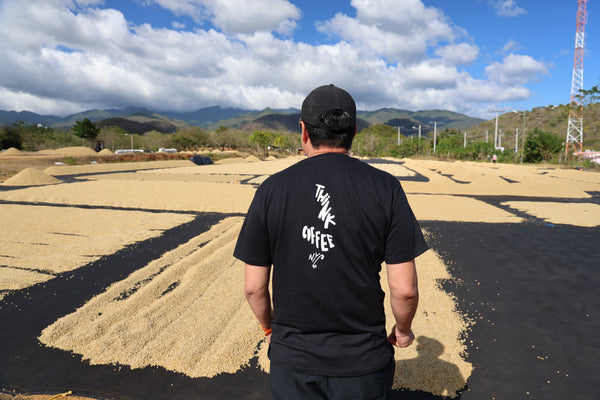
With our origin partner Jorge Lagos in Finca Santa Teresa, Nicaragua 2025.
If anything, they become more present.
At events like this, coffee is often shown at its very best, carefully selected, beautifully processed, thoughtfully roasted. It’s exciting, and it should be. But behind that presentation is a much more complex reality.
Across coffee-growing regions, producers are navigating constant uncertainty. Climate variability shifts harvests and affects crop health. Rising costs and volatile markets force difficult decisions. Labor shortages, infrastructure limitations, and — in some places — political instability all add pressure to an already demanding process.
These aren’t occasional challenges. They’re ongoing conditions. And they shape every coffee long before it ever reaches a roaster, a café, or an event floor.
What stayed with me most after San Diego wasn’t just the coffees themselves, it was this contrast. The way coffee can feel so bright and celebratory on one end, while requiring so much persistence and resilience on the other.

Jorge Lagos’s farm in Finca Santa Teresa, Nicaragua.
And how often that balance gets lost.
Because the truth is, much of the recognition, the excitement, the storytelling, even the credit for “quality” tends to gather on the consuming side of coffee: roasters, importers, cafés, customers. Meanwhile, the people who do the foundational work of producing that coffee are often navigating the hardest conditions with the least visibility.
That imbalance is something I think about more and more.
Not as a criticism of celebration — coffee should be enjoyed. It is something special. But appreciation feels incomplete if it doesn’t also include a clearer understanding of what it takes to produce it.
As I continue sourcing coffees and making decisions this season, that perspective is close at hand. Responsible sourcing isn’t just about finding exceptional lots. It’s about staying connected to the realities behind them and maintaining relationships through both strong years and difficult ones.
When challenges show up in the cup, the answer isn’t to look away. It’s to stay engaged. To adapt. To support producers not just when everything aligns perfectly, but when it doesn’t.
Our goal is still the same: to offer exceptional coffee.
But my definition of “exceptional” continues to evolve. It’s not just about flavor or score. It’s about the people behind the coffee. Their work, their decisions, and their ability to keep going in an environment that asks a lot of them.
So while coffee will always be judged in the cup, I think it’s worth holding both sides at once:
The joy, the creativity, the excitement.
And the reality that makes it possible.
Because the story behind the cup doesn’t take away from the experience.
It deepens it.
-Enrique Hernandez, Chief Impact Officer & Coffee Buyer, Evolved Q-Arabica Grader